Learn how to plan cooling towers for reliable operation, lower energy use, better airflow control, and long-term equipment protection. Ideal for engineers, f...
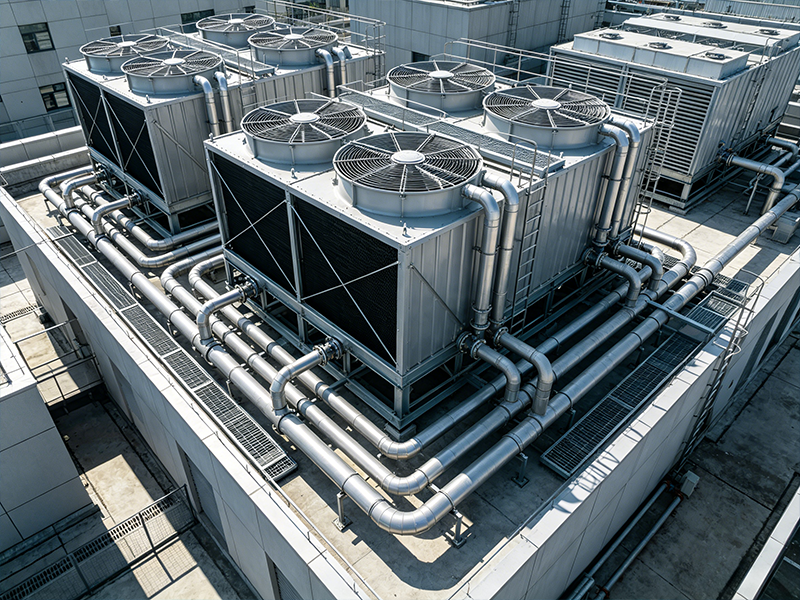
Cooling Towers are an important part of modern HVAC and industrial infrastructure. In central chiller plants, industrial process cooling, refrigeration systems, power facilities, and large HVAC plants, the system must keep operating reliably while handling heat rejection, fan efficiency, water drift, corrosion, scaling, vibration, and seasonal load changes. A good design does more than move air or reject heat; it protects equipment, stabilizes processes, and reduces operating risk.
When planning cooling towers, engineers should look at the full operating environment. The right solution depends on load profile, airflow resistance, temperature conditions, controls, and maintenance access. A system selected only by one headline parameter can still perform poorly after installation.
Application Background
In real projects, cooling towers rarely operate under one fixed condition. A facility may run at full load during the day, partial load at night, and unstable load during seasonal changes or production changes. This means that the equipment must be selected not only for peak demand, but also for how it behaves across a wide operating range.
For central chiller plants, industrial process cooling, refrigeration systems, power facilities, and large HVAC plants, the hidden cost is often not the purchase price of the equipment. It is the cost of unstable operation: excessive fan power, poor temperature control, frequent alarms, premature component wear, and emergency maintenance. A careful design at the beginning can reduce these risks throughout the life cycle.
What a Good Design Should Achieve
A good cooling towers solution should keep the system stable without forcing fans, pumps, compressors, or control valves to run outside their efficient operating range. It should also be easy for operators to understand. If operators cannot see the relationship between setpoints, airflow, pressure, and alarms, the system may be adjusted manually in ways that reduce efficiency.
Another important point is serviceability. In many sites, equipment is installed in a crowded plant room, rooftop area, workshop corner, or technical corridor. If filters, fans, coils, sensors, or motors are difficult to access, routine maintenance will be delayed. Over time, small pressure losses and dirty components become large energy and reliability problems.
Key Selection Priorities
Confirm heat rejection capacity before final model selection.
Confirm wet-bulb temperature before final model selection.
Confirm fan and motor efficiency before final model selection.
Confirm water quality before final model selection.
Confirm maintenance plan before final model selection.
|
Selection Point
|
Why It Matters
|
Practical Advice
|
|
Load profile
|
Cooling towers must match real operating demand, not only nameplate data.
|
Review peak load, part-load hours, and seasonal conditions.
|
|
Airflow path
|
Poor airflow design increases pressure loss and fan energy in central chiller plants, industrial process cooling, refrigeration systems, power facilities, and large HVAC plants.
|
Check duct route, inlet clearance, filters, coils, and discharge direction.
|
|
Control strategy
|
Fixed-speed operation often wastes energy during partial load.
|
Use variable speed control, sensors, and alarms where the application supports it.
|
|
Maintenance access
|
Hard-to-service equipment becomes expensive over the life cycle.
|
Leave space for filter, fan, coil, and motor inspection.
|
Practical Recommendations
For new projects, start with the design load and then check how the equipment will operate during part-load conditions. For retrofit projects, measure actual pressure, temperature, airflow, noise, and energy consumption before choosing replacement fans or cooling components.
It is also important to leave enough engineering margin without oversizing the system. Oversizing may look safer on paper, but it can create unstable control, more noise, and higher investment cost. Undersizing is equally risky because the system may run continuously at maximum output and still fail to meet demand. The right balance comes from matching real load data with the correct fan curve, heat-transfer capacity, and control range.
During commissioning, the project team should verify actual operating data instead of assuming that catalog performance will appear automatically on site. Airflow direction, pressure loss, motor current, vibration, noise, and control response should be checked under realistic conditions. These records become useful references for future maintenance and troubleshooting.
A well-selected system can deliver efficient heat rejection and reliable chilled-water or process cooling operation. It also makes future maintenance easier because the operating point, control logic, and service requirements are clear from the beginning.
FAQ
What is the most important factor when selecting cooling towers?
The most important factor is matching the system to the real operating condition. For cooling towers, this means checking heat load, airflow, pressure loss, environment, and control requirements together.
Should I choose the largest available fan or cooling capacity?
Not always. Oversizing can increase noise, cycling, energy use, and control instability. A better approach is to calculate the load and select equipment with enough margin but not excessive capacity.
How can energy consumption be reduced?
Energy use can often be reduced through efficient fans, variable speed control, clean filters or coils, correct airflow balance, and better operating schedules.
When should the system be upgraded?
Upgrade should be considered when heat rejection, fan efficiency, water drift, corrosion, scaling, vibration, and seasonal load changes cause unstable operation, high energy cost, frequent alarms, or rising maintenance work.

