Ventilation systems quietly waste energy — usually from bad design, wrong fan choice, dirty filters, or air leaks. The fix isn't one big change. Find where resistance builds up, match the fan to the load, seal leaks, and adjust controls. Small targeted fixes = real savings.
Ventilation system energy efficiency is a major concern in industrial and commercial facilities. These systems are essential for maintaining air quality and temperature control, but they are also one of the largest sources of electricity consumption in buildings. In many cases, energy waste happens quietly over time due to poor design, incorrect equipment selection, or lack of maintenance. Improving efficiency not only reduces operating costs but also helps extend equipment lifespan and supports long-term sustainability goals.
Duct Design and Airflow Resistance
One of the most important factors affecting ventilation system energy efficiency is duct design. When airflow passes through long ducts, sharp bends, or sudden size changes, resistance increases significantly. This forces the fan to consume more energy to maintain required airflow.
In real applications, even small design improvements can make a noticeable difference. For example, reducing unnecessary bends or improving transition sections can lower airflow resistance and improve overall system performance without replacing major equipment.
Choosing the Right Fan Type
Fan selection plays a critical role in ventilation efficiency. Different fan types perform differently depending on system resistance.
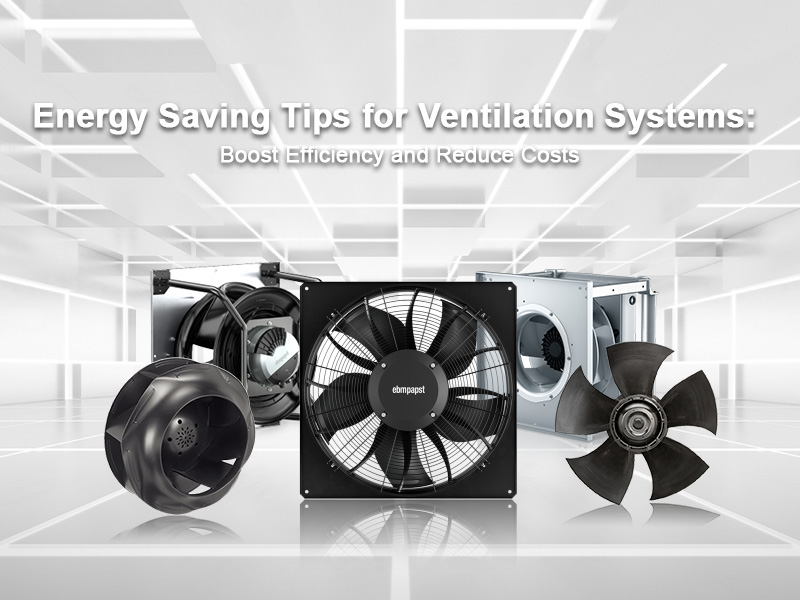
Axial fans are suitable for low-resistance environments where large air volume is required. However, in systems with ducts, filters, or higher pressure requirements, they often become inefficient.
Centrifugal fans, especially backward-curved designs, are better suited for high-resistance systems. They maintain stable airflow under pressure and improve overall energy efficiency.
Matching the correct fan type to the system condition is one of the most effective ways to reduce unnecessary energy consumption.
Maintenance and System Degradation
Over time, ventilation systems naturally lose efficiency if not properly maintained. Dust accumulation on fan blades, clogged filters, and worn bearings all increase system resistance.
In practice, performance often drops gradually, making the issue difficult to notice at first. However, energy consumption continues to rise as the system works harder to maintain airflow.
Regular cleaning, filter replacement, and mechanical inspection are essential to maintaining stable ventilation system energy efficiency.
Air Leakage in Ventilation Systems
Air leakage is one of the most overlooked causes of energy loss. Small gaps in duct joints or damaged connections can lead to significant airflow loss over time.
When leakage occurs, fans must operate at higher power to compensate, which directly increases electricity consumption. Proper sealing of ducts and regular inspection of connections can significantly improve airflow efficiency and reduce wasted energy.
Environmental Conditions
Operating environments also affect ventilation system performance. Dust, humidity, and corrosive air can reduce efficiency and accelerate equipment wear.
Dust buildup changes airflow patterns on fan blades, while moisture can lead to corrosion or imbalance. These factors increase energy consumption and reduce system lifespan.
Using corrosion-resistant materials and installing pre-filtration systems can help maintain stable performance in harsh environments.
Intelligent Control and Energy Optimization
Modern ventilation systems often use variable speed drives (VSDs) to adjust fan speed based on demand. This allows airflow to match actual requirements instead of running at full power all the time.
Demand-based ventilation control systems can further improve efficiency by adjusting airflow according to occupancy, temperature, or air quality.
When properly configured, these systems significantly reduce energy consumption while maintaining required ventilation performance.
System Upgrades and Long-Term Efficiency
Older ventilation systems typically consume more energy due to outdated motors and inefficient fan designs. Upgrading to modern high-efficiency motors and advanced fan systems can deliver immediate energy savings.
Although the initial investment may be higher, the reduction in operating costs often results in a relatively short payback period.
Conclusion
Improving ventilation system energy efficiency requires a combined approach. Duct design, fan selection, maintenance, air leakage control, environmental adaptation, and intelligent control systems all play a role in overall performance.
Instead of focusing on a single fix, it is more effective to optimize the entire system step by step. Even small improvements can lead to significant energy savings over time.
For complex systems, consulting ventilation experts can help identify hidden inefficiencies and implement targeted improvements that deliver both cost savings and performance gains.

