Fan efficiency directly hits your energy bills. Oversized or undersized fans waste power. Centrifugal fans handle high static pressure better than axial ones. EC motors adjust speed to actual demand, saving real money. Keep ducts clean and leak-free. Efficiency cuts costs and carbon — don't ignore it.
In industrial and commercial settings, fans are essential components for ventilation, cooling, and process airflow management. While choosing the right fan often considers airflow and static pressure, efficiency is equally critical, directly impacting energy consumption, operational costs, and environmental sustainability. Understanding how fan efficiency affects energy consumption is crucial for businesses looking to optimize performance while reducing expenses.
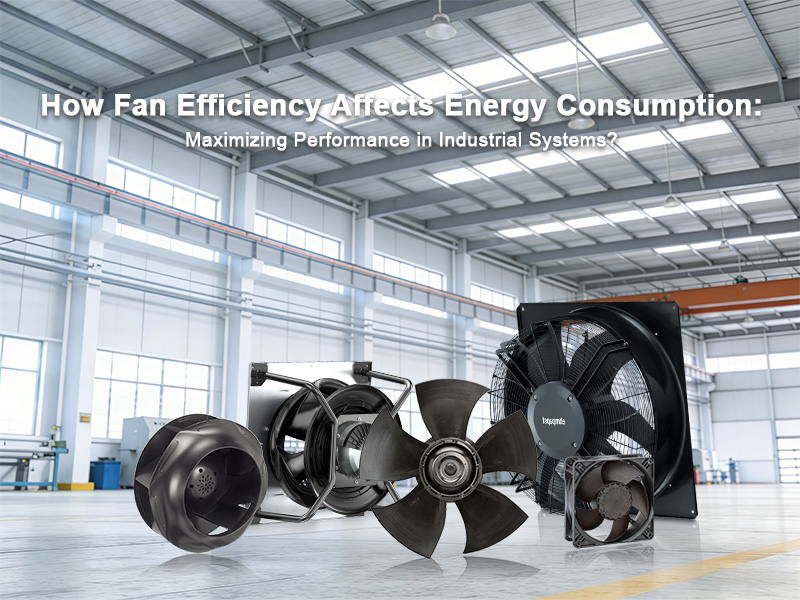
Fan efficiency refers to the ratio of the useful airflow energy provided by the fan to the total electrical energy it consumes. High-efficiency fans convert more input energy into efficient airflow, reducing power waste and lowering electricity bills. Conversely, inefficient fans consume more energy to achieve the same airflow, which significantly increases operating costs over time. In large industrial systems where multiple fans operate continuously, even a slight increase in fan efficiency can lead to significant energy savings.
One of the primary ways fan efficiency affects energy consumption is in system design. Mismatched dimensions or mismatched fans often fall outside their optimal performance range, leading to increased energy consumption and reduced airflow. For example, an oversized fan can create unnecessary excess airflow, wasting energy and creating turbulence that reduces system performance. On the other hand, a smaller fan size may struggle to meet airflow demands, forcing it to run continuously at maximum speed, which can also increase energy consumption. Therefore, choosing the right fan type and size is crucial for achieving efficiency and reliability.
The type of fan also plays a key role in energy efficiency. Centrifugal fans are known for their ability to generate high static pressure, making them ideal for systems with complex air ducts, filters, or air handling units. Its efficiency depends on the impeller design to match the system requirements. For example, backward-bending centrifugal fans are highly efficient at medium to high static pressure, making them the preferred choice for industrial ventilation. Axial fans, while suitable for low-voltage, high-volume applications, are less effective in systems with higher resistance. Choose the right fan type to ensure that the system provides the required airflow and avoid unnecessary energy loss.
Modern fan technologies, such as electronically commutated (EC) motors, offer another way to improve efficiency and reduce energy consumption. EC fans provide precise speed control and dynamically adjust airflow based on demand, ensuring that the fan consumes only the necessary energy. Unlike traditional AC fans, which typically operate at a fixed speed, EC fans reduce electricity bills, reduce heat generation, and extend equipment life. In applications such as data centers, manufacturing facilities, and HVAC systems, the adoption of high-efficiency fans can lead to significant operational savings.
System resistance, including ducts, filters, and dampers, can also affect fan efficiency and energy consumption. The higher resistance forces the fan to work harder to maintain airflow, increasing electricity usage. Regular maintenance to clean filters, remove debris, and plug leaks in pipes can improve fan performance and reduce unnecessary energy consumption. Additionally, the duct layout is optimized with smooth transitions and minimal flex, helping to maintain stable airflow while reducing fan load.
Energy-efficient fan operation not only saves money but also contributes to environmental sustainability. Industrial facilities are under increasing pressure to reduce carbon footprints, and efficient fans play a key role in lowering energy-related emissions. By selecting high-efficiency fans and integrating smart control systems, companies can achieve both economic and environmental benefits, aligning operational practices with modern sustainability goals.
In conclusion, fan efficiency is a critical determinant of energy consumption in industrial and commercial ventilation systems. From proper fan selection and system design to advanced motor technology and maintenance practices, every aspect of the fan system contributes to energy performance. By prioritizing efficiency, businesses can reduce operating costs, enhance system reliability, and support sustainable operations, making fan efficiency a cornerstone of modern industrial management.
For organizations looking to optimize their ventilation or cooling systems, consulting with experienced engineers and suppliers can help identify the best fan solutions and strategies to maximize efficiency and reduce energy consumption.

