Learn how to reduce energy losses in industrial ventilation systems through better airflow design, fan selection, maintenance, and smart speed control.
Industrial ventilation systems are essential for maintaining air quality, temperature control, and safe operating conditions in factories, warehouses, processing plants, and commercial facilities. However, ventilation systems are also among the largest sources of energy consumption in industrial environments. When airflow systems are not properly optimized, energy losses increase quickly, leading to higher operating costs and reduced system efficiency.
Understanding how to reduce energy losses in industrial ventilation is important not only for lowering electricity consumption but also for improving airflow stability, extending equipment lifespan, and maintaining reliable long-term performance.
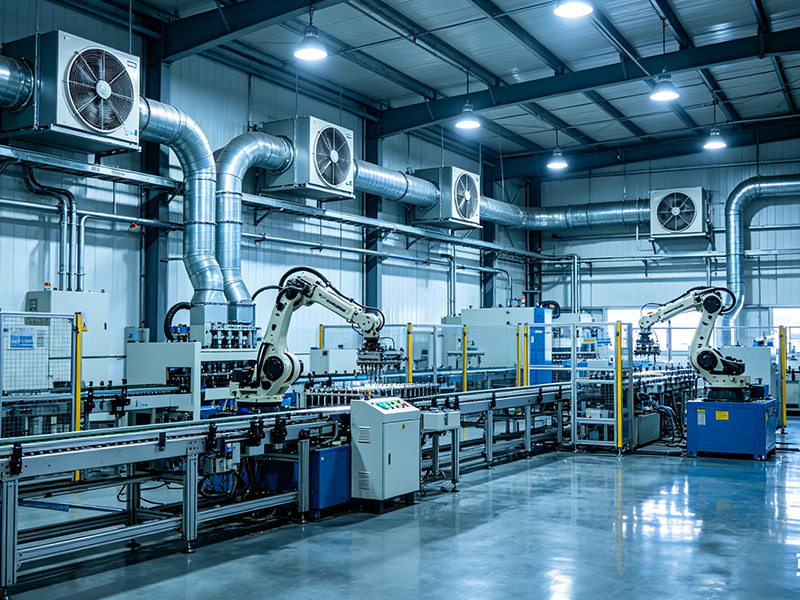
In most industrial facilities, energy loss is not caused by a single issue. Instead, it usually results from airflow resistance, poor fan selection, air leakage, inefficient control systems, and inadequate maintenance working together over time. By improving these areas, businesses can significantly increase industrial ventilation efficiency without sacrificing airflow performance.
Poor Airflow Design and Pressure Loss
One of the biggest causes of energy loss in industrial ventilation systems is poor airflow design. When air moves through long duct runs, sharp turns, narrow passages, or restrictive components, system resistance increases. As static pressure rises, the fan must work harder to maintain the required airflow.
Higher resistance directly increases motor load and power consumption. In many cases, excessive energy use is caused more by inefficient duct design than by the fan itself.
Optimizing duct layout is one of the most effective ways to improve ventilation system efficiency. Reducing unnecessary bends, improving airflow paths, and selecting properly sized ducts can lower pressure drop and reduce fan energy consumption significantly.
A well-designed ventilation system allows air to move more smoothly and efficiently, helping fans operate closer to their optimal performance range.
Choosing the Right Industrial Fan
Industrial fan selection has a major impact on energy efficiency. Using the wrong fan type for the operating conditions often results in unnecessary power consumption and unstable airflow performance.
Different fan designs are intended for different airflow and pressure requirements. Axial fans are generally more suitable for high-airflow, low-pressure applications, while centrifugal fans perform better in systems with higher resistance and static pressure.
When the fan is not properly matched to the ventilation system, it may operate far from its peak efficiency point. This causes wasted energy, higher operating temperatures, and increased mechanical stress over time.
Correct industrial fan selection should always consider airflow volume, static pressure, operating environment, temperature, and system resistance together. A properly matched fan improves airflow efficiency while reducing long-term energy losses.
Air Leakage in Ventilation Systems
Air leakage is another major source of energy loss in industrial ventilation systems. Even small leaks around duct joints, dampers, flanges, or connections can reduce system efficiency significantly.
When conditioned or ventilated air escapes before reaching its intended destination, the system compensates by increasing fan speed or extending operating time. This results in higher energy consumption and unnecessary operating costs.
In large industrial facilities, small leakage points can accumulate into substantial airflow losses over time.
Proper duct sealing, routine inspection, and preventive maintenance help reduce air leakage and maintain stable ventilation efficiency. Keeping airflow contained within the designed system improves both energy performance and airflow consistency.
Variable Speed Drives and Smart Fan Control
Traditional industrial ventilation systems often operate at fixed speed regardless of actual airflow demand. This approach wastes energy during periods of low production activity or reduced ventilation requirements.
Modern energy-efficient ventilation systems use technologies such as variable speed drives (VSDs) or EC motors to adjust fan speed dynamically based on real-time operating conditions.
Because fan energy consumption changes dramatically with speed, even small speed reductions can lead to substantial energy savings. Variable speed control allows the ventilation system to provide only the airflow required at a given moment, improving efficiency without compromising performance.
Smart control systems also help reduce mechanical stress on motors and fan components, extending equipment lifespan while lowering operating costs.
Maintenance and System Efficiency
Lack of maintenance is one of the most overlooked causes of energy loss in industrial ventilation systems. Over time, dust accumulation, dirty filters, worn bearings, and clogged airflow paths increase system resistance and reduce fan efficiency.
As resistance increases, the fan motor consumes more energy to maintain the same airflow level. In severe cases, neglected maintenance can lead to overheating, vibration problems, or premature equipment failure.
Routine industrial ventilation maintenance helps keep the system operating within its designed efficiency range. Cleaning filters, inspecting ductwork, lubricating bearings, and checking fan balance are all important for maintaining low energy consumption and stable airflow performance.
In many facilities, simple maintenance improvements can produce noticeable reductions in electricity usage.
Environmental Conditions and Operating Challenges
Environmental conditions can also affect ventilation system efficiency. High temperatures, humidity, airborne dust, and corrosive particles may reduce fan performance over time and increase energy losses.
In harsh industrial environments, equipment may experience faster material degradation, airflow disruption, or reduced cooling efficiency. Selecting industrial fans designed specifically for demanding operating conditions helps maintain long-term system performance and minimize unnecessary energy waste.
Proper material selection, corrosion protection, and environmental resistance are especially important in applications involving chemicals, mining, manufacturing, or high-temperature processing.
The Importance of System Balancing
System balancing is another important factor in reducing energy losses. In poorly balanced ventilation systems, airflow may not be distributed evenly between different areas or operating zones.
As a result, some fans may become overloaded while others operate inefficiently at low demand conditions. Uneven airflow distribution increases energy consumption and reduces overall system stability.
Proper balancing ensures that airflow is distributed correctly throughout the ventilation network, allowing each component to operate closer to its optimal efficiency point.
Balanced systems not only improve energy efficiency but also help maintain more stable air quality and temperature control across the facility.
Improving Long-Term Ventilation Efficiency
Reducing energy losses in industrial ventilation requires a complete system approach rather than focusing on a single component. Fan performance, duct design, airflow management, control systems, and maintenance all influence overall energy efficiency.
When these elements are optimized together, industrial ventilation systems can deliver stable airflow performance while consuming significantly less energy.
For businesses seeking to reduce operating costs and improve ventilation reliability, evaluating hidden inefficiencies within the system is often the first step toward meaningful energy savings.
Working with experienced ventilation engineers or industrial fan suppliers can help identify opportunities for improvement and ensure the system operates at maximum efficiency over the long term.
Final Thoughts
Industrial ventilation systems play a critical role in maintaining safe and efficient operating environments, but they can also become major sources of unnecessary energy consumption if not properly optimized.
Reducing energy losses involves improving airflow design, selecting the correct industrial fan, minimizing air leakage, implementing smart speed control, and maintaining the system regularly.
A well-optimized ventilation system not only lowers electricity costs but also improves airflow stability, extends equipment lifespan, and enhances overall operational reliability.
By taking a proactive approach to industrial ventilation efficiency, businesses can achieve long-term energy savings while maintaining high-performance airflow systems.
FAQ
What causes energy losses in industrial ventilation systems?
Energy losses are commonly caused by poor airflow design, excessive system resistance, incorrect fan selection, air leakage, dirty filters, worn components, and inefficient speed control methods.
How can airflow design improve ventilation efficiency?
Optimized duct layouts reduce pressure loss and airflow resistance. Shorter duct runs, smoother airflow paths, and properly sized ducts help fans operate more efficiently and consume less energy.
Why is proper industrial fan selection important for energy savings?
Different fan types are designed for different airflow and pressure conditions. Choosing the correct fan ensures the system operates near its peak efficiency point, reducing wasted energy and improving long-term performance.
Do variable speed drives reduce industrial ventilation energy consumption?
Yes. Variable speed drives allow fans to adjust speed based on real-time airflow demand. Because fan power consumption decreases significantly at lower speeds, VSD systems can greatly improve energy efficiency.
How does maintenance affect ventilation system energy efficiency?
Dirty filters, clogged ducts, worn bearings, and airflow obstructions increase system resistance and force fans to consume more energy. Regular maintenance helps maintain stable airflow and reduces unnecessary power consumption.

