Learn how fan bearings affect industrial fan reliability, airflow efficiency, energy consumption, and long-term system performance.
In industrial ventilation and cooling systems, fans are often viewed simply as equipment used to move air. However, the long-term reliability and efficiency of these systems depend heavily on a much smaller but extremely important component: fan bearings.
In real industrial environments, issues such as unstable airflow, excessive vibration, rising energy consumption, and unexpected downtime are frequently linked to bearing problems rather than the fan blade or motor itself. Because industrial fans often operate continuously under demanding conditions, the quality and condition of industrial fan bearings directly influence system stability, operating efficiency, and maintenance costs.
Understanding the role of bearings in industrial fan systems is therefore essential for improving equipment reliability, extending service life, and reducing operational risk.
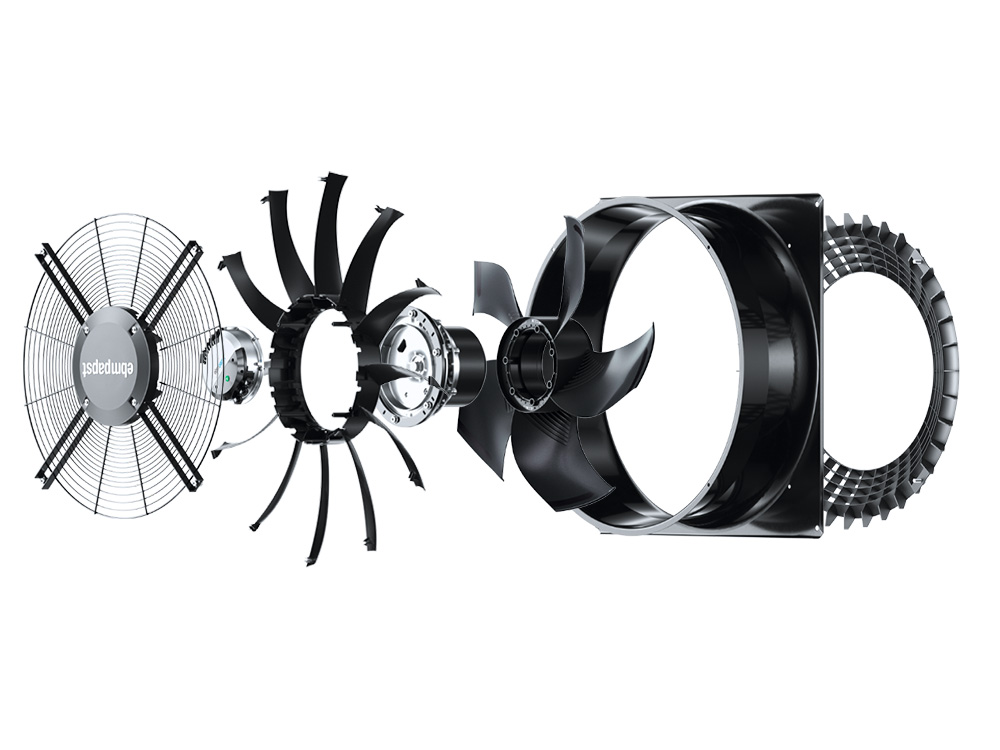
Why Fan Bearings Are Critical in Industrial Fans
The primary role of fan bearings is to support the rotating shaft and allow the fan impeller to spin with minimal friction. Although this function appears simple, it is fundamental to maintaining stable airflow and efficient fan operation.
When bearings operate correctly, they help:
Reduce rotational resistance
Maintain smooth shaft movement
Minimize vibration
Improve energy efficiency
Protect motors and connected components
In industrial cooling and ventilation systems, even minor bearing wear can affect overall fan performance. Increased friction forces the motor to consume more energy while also placing additional stress on the shaft, housing, and impeller.
Over time, this can lead to overheating, imbalance, abnormal vibration, and eventually complete system failure.
For continuous-operation systems, maintaining reliable industrial fan bearings is therefore essential for stable long-term operation.
Industrial Operating Conditions Create Major Bearing Challenges
Unlike standard commercial fans, industrial systems often operate under harsh environmental conditions.
Many ventilation and cooling systems run continuously in environments involving:
High temperatures
Dust and airborne particles
High humidity
Chemical exposure
Corrosive environments
Under these conditions, fan bearings for industrial applications must withstand both mechanical stress and environmental contamination.
High temperatures can degrade lubricants and accelerate wear, while dust or moisture entering the bearing housing may damage internal surfaces and reduce operating life.
This is why bearing selection is not simply about matching dimensions. Engineers must evaluate environmental conditions, load requirements, operating speed, and maintenance intervals when selecting industrial fan bearings.
How Bearing Performance Affects Energy Efficiency
The connection between bearing condition and energy consumption is often underestimated.
When bearings begin to wear, friction increases inside the fan assembly. Even small increases in resistance can reduce rotational efficiency and disrupt airflow stability.
As a result:
Motors require more power to maintain speed
Vibration levels increase
Airflow consistency decreases
System efficiency drops
In large industrial ventilation systems where multiple fans operate simultaneously, inefficient bearings can significantly increase electricity consumption over time.
This is particularly important in facilities focused on energy-saving strategies and sustainable industrial operations.
Maintaining high-performance fan bearings therefore contributes not only to equipment reliability but also to overall energy efficiency optimization.
Lubrication Plays a Major Role in Bearing Lifespan
Proper lubrication is one of the most important factors influencing industrial fan bearing performance.
Lubrication helps:
Reduce metal-to-metal contact
Minimize friction
Dissipate heat
Protect against wear and corrosion
However, industrial operating conditions can make lubrication management difficult.
At high temperatures, lubricants may degrade or evaporate more quickly. In low-temperature environments, lubricant viscosity may increase, making smooth rotation more difficult.
Selecting the correct lubricant type for specific operating conditions is essential for maintaining stable fan performance and extending bearing service life.
In modern industrial systems, advanced lubrication solutions are increasingly used to reduce maintenance frequency and improve long-term reliability.
Installation Quality Directly Influences Bearing Reliability
Even high-quality fan bearings can fail prematurely if installation is incorrect.
Improper shaft alignment or uneven mounting creates abnormal mechanical loads that increase stress on the bearing surfaces. Over time, this causes excessive vibration, noise, and accelerated wear.
In high-speed industrial fans, even small alignment errors can significantly reduce bearing lifespan.
Correct installation practices help ensure:
Stable shaft rotation
Reduced vibration
Balanced mechanical loading
Longer operating life
This is why proper alignment and installation procedures are critical in any industrial fan maintenance strategy.
Predictive Maintenance Helps Prevent Costly Downtime
Unexpected bearing failure can result in serious operational disruptions, especially in facilities that depend on continuous airflow and cooling.
Early warning signs of bearing problems often include:
Increased vibration
Abnormal noise
Rising operating temperature
Reduced airflow stability
Modern industrial facilities increasingly use predictive maintenance methods such as:
Vibration analysis
Thermal monitoring
Condition monitoring systems
These technologies help detect bearing wear before major failure occurs.
By implementing proactive maintenance strategies, operators can:
Extend bearing lifespan
Reduce emergency downtime
Lower maintenance costs
Improve system reliability
For industries relying on continuous operation, predictive maintenance has become a critical part of efficient industrial fan management.
Choosing the Right Bearing Type Matters
Different industrial applications require different bearing designs.
For example:
Sealed bearings are commonly used in dusty environments to reduce contamination risk.
High-temperature bearings are designed for extreme heat conditions.
Heavy-duty bearings support higher mechanical loads in large industrial fans.
Selecting the correct fan bearings for industrial applications depends on several factors, including:
Load capacity
Rotational speed
Environmental exposure
Operating temperature
Maintenance requirements
Proper bearing selection improves reliability, reduces maintenance frequency, and supports long-term system efficiency.
The Future of Industrial Fan Bearing Technology
As industrial systems continue evolving toward higher efficiency and continuous operation, the importance of industrial fan bearings continues to grow.
Modern developments include:
Advanced bearing materials
Improved sealing technology
Longer-life lubricants
Smart condition monitoring systems
These innovations help reduce maintenance requirements while improving reliability and energy efficiency.
In modern ventilation and cooling systems, even small improvements in bearing technology can produce measurable gains in overall operational performance.
Conclusion
The role of fan bearings in industrial operations extends far beyond basic mechanical support.
They directly affect airflow stability, energy efficiency, equipment reliability, and maintenance costs. Poor bearing performance can lead to vibration, overheating, increased power consumption, and costly system downtime.
By selecting high-quality industrial fan bearings, ensuring correct installation, and implementing predictive maintenance strategies, businesses can significantly improve the long-term reliability and efficiency of industrial ventilation systems.
For industries that depend on continuous cooling and airflow, bearing reliability is not simply a maintenance concern—it is a key factor in operational success.
FAQ Section
1. What are the most common signs of industrial fan bearing failure?
The most frequent indicators of bearing failure include increased audible noise (grinding or squealing), excessive vibration, and abnormal temperature spikes in the bearing housing. If you notice any of these, immediate lubrication checks or vibration analysis are recommended to prevent total motor failure.
2. How often should I lubricate my industrial fan bearings?
Lubrication frequency depends on the operating temperature, speed (RPM), and environment. While some sealed bearings are "lubricated for life," open bearings in continuous-duty industrial fans may require re-greasing every 3 to 6 months. Always refer to the manufacturer’s L10 life calculations for precise intervals.
3. Why is my fan vibrating even after installing new bearings?
Vibration post-installation is usually caused by shaft misalignment or an unbalanced impeller. If the bearings aren't perfectly seated or the shaft is slightly bent, it creates a centrifugal force that mimics bearing failure. Using laser alignment tools during installation is the best way to solve this.
4. Which is better for industrial fans: Ball bearings or Roller bearings?
It depends on the load. Ball bearings are ideal for high-speed, lower-load applications and offer less friction. Roller bearings (especially spherical roller bearings) are superior for heavy-duty industrial fans that handle high radial loads or suffer from slight shaft misalignments.
5. How can I reduce energy costs in my ventilation system through bearing maintenance?
Worn bearings increase mechanical drag, forcing the motor to draw more current to maintain the same RPM. By using high-efficiency, low-friction bearings and maintaining optimal lubrication, you can reduce the total energy consumption of a large-scale ventilation system by 2% to 5%.

