We use cookies to improve your online experience. By continuing browsing this website, we assume you agree our use of cookies.
  • R3G190-8317076398 ebm-papst
  • R3G190-8317076398 ebm-papst
  • R3G190-8317076398 ebm-papst
1/1
  • R3G190-8317076398 ebm-papst
  • R3G190-8317076398 ebm-papst
  • R3G190-8317076398 ebm-papst

R3G190-8317076398 ebm-papst

SKU:
4.7 (0)
98 Sold
$95.97 $0.00
ebm-papst,Centrifugal Fan 190mm,220V,170W,941m3/h,987Pa,4524rpm,53db
Received successfully
Coupon Code
CONTINUE SHOPPING
Quantity:
0 in stock
Save More with Affordable Sea Freight, Talk to Our Experts Today!
Download
  • R3G190-8317076398 ebm-papst
  • R3G190-8317076398 ebm-papst
  • R3G190-8317076398 ebm-papst
  • R3G190-8317076398 ebm-papst
  • R3G190-8317076398 ebm-papst
  • R3G190-8317076398 ebm-papst
1/1
  • R3G190-8317076398 ebm-papst
  • R3G190-8317076398 ebm-papst
  • R3G190-8317076398 ebm-papst
  • Description
  • Detailed Information
Brand: ebmpapst
Part No: R3G190-8317076398
Fan Type: Centrifugal Fan
Rated Voltage(V): 220
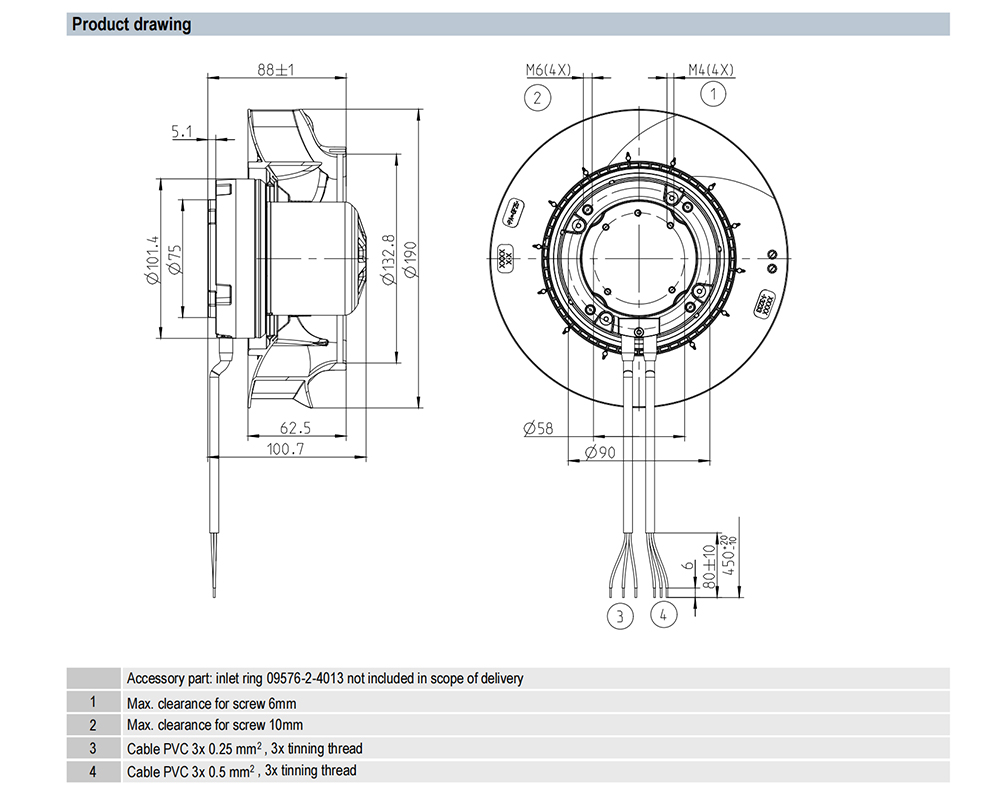
Size(mm): 190
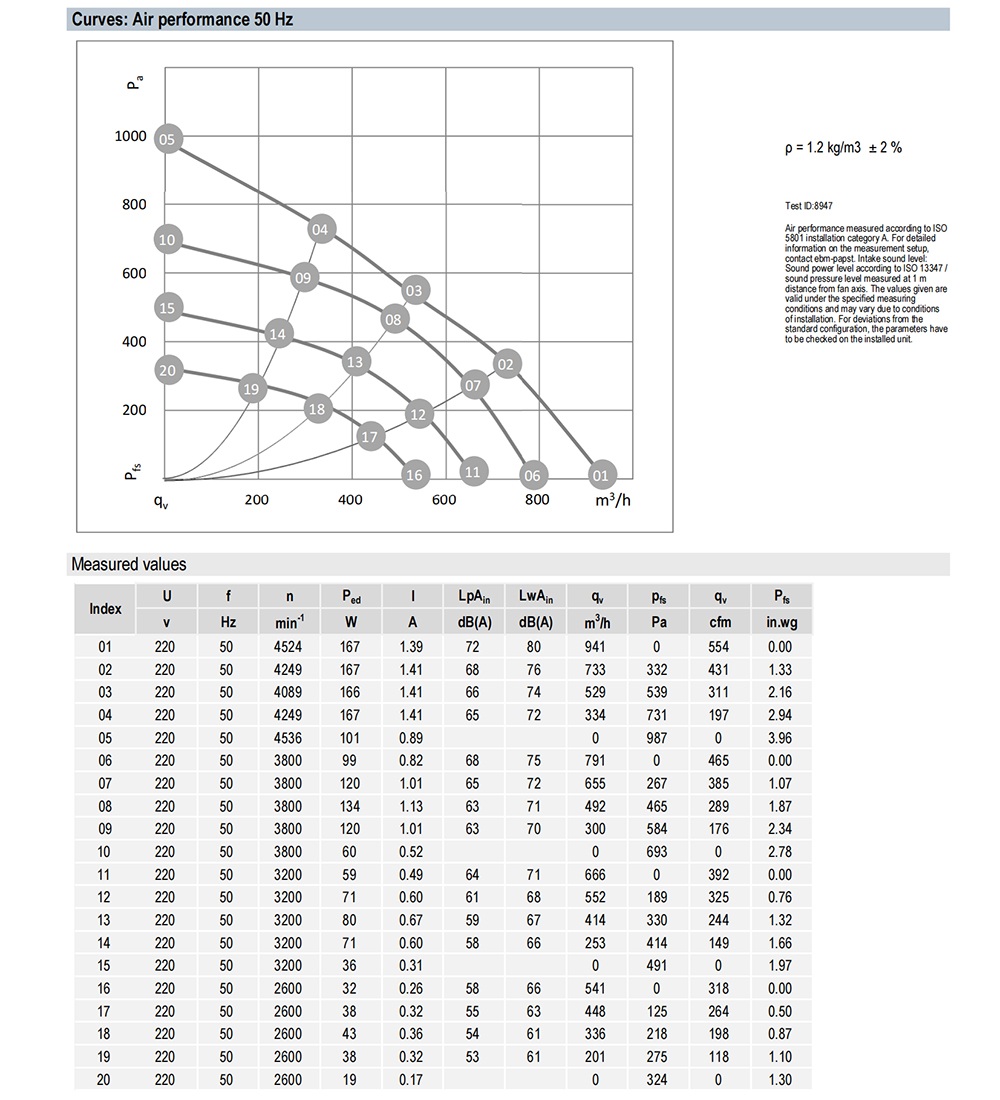
Max.Air Flow(m³/h): 941
Max.Pressure(Pa): 987
Input Power(W): 170
Speed(rpm): 4524
Noise(db): 53

Efficient and reliable aerodynamic solutions: In-depth analysis of ebm-papst R3G190-8317076398 centrifugal fan


In the evolution of global ventilation and air treatment technology, ebm-papst has always led the industry change as an innovator. As a star model in its product line, the R3G190-8317076398 centrifugal fan has become a core power component in clean rooms, data centers, commercial buildings and other fields by virtue of its extreme polishing of technical details and precise adaptation to multiple scenarios. This article will conduct an in-depth analysis from the dimensions of technical genes, application ecology, design philosophy and industry influence, and comprehensively present the excellent performance and market value of this fan.

  1. Technical genes: precise interpretation of aerodynamics

The performance of R3G190-8317076398 comes from the deep accumulation of ebm-papst's decades of aerodynamic research. The setting of its core parameters is not a simple numerical stacking, but is based on the precise judgment of the airflow characteristics of different application scenarios. The 220V rated voltage is compatible with the world's mainstream civil and commercial power supply networks, and by optimizing the motor winding design, it can achieve stable operation under voltage fluctuations. The compact body size of 190mm has achieved a golden balance between the impeller diameter, volute volume and installation space after multiple generations of product iterations and optimization, and can be adapted to more than 90% of the standard ventilation modules on the market.

(I) Impeller design: a double breakthrough in efficiency and silence

The curved surface profile of the forward-inclined impeller adopts a non-uniform thickness blade design. The thickness difference between the root and tip of the blade has been verified by millions of simulations using computational fluid dynamics (CFD) software to ensure the adhesion of the airflow on the blade surface and the energy transfer efficiency. When the impeller runs at 4524rpm, the linear speed of the blade tip reaches the leading level of products of the same size in the industry, but the eddy noise generated by airflow separation is reduced by more than 15% through the innovative design of the serrated noise reduction structure on the trailing edge of the blade. This art of balancing "speed and noise reduction" allows the fan to keep the noise within a quiet range of 53dB when outputting a maximum air volume of 941m³/h, which is equivalent to the volume level of normal indoor conversation.

(II) Volute structure: the spatial philosophy of airflow management

The involute equation of the volute has been modified and iterated five times to form a unique "hypercurvature transition surface". The surface curvature near the impeller inlet is large, which can quickly capture high-speed airflow and guide its turning; the volute outlet section adopts a gentle curvature design to reduce airflow impact loss. This structure allows the fan to maintain an aerodynamic efficiency of more than 89% at a maximum static pressure of 987Pa. Measured data show that when the system resistance increases by 30%, the air volume attenuation rate of the fan is only 60% of that of similar products, showing excellent "resistance stability", which is crucial for scenarios that require long-term operation and are difficult to maintain frequently (such as high-altitude duct systems).

(III) Motor technology: the core support of durability

The outer rotor motor is equipped with a silicon steel sheet lamination process, the silicon content is increased to 3.5%, and the core loss is reduced by 20%. The winding coil uses high-frequency pulse-resistant enameled wire, which can withstand 1500V inter-turn withstand voltage test and adapt to the complex electromagnetic environment of modern power electronic equipment. The connection between the motor shaft and the impeller adopts a thermal expansion and contraction interference fit process, and cooperates with anti-loosening and anti-retraction washers to ensure that there is no axial movement under long-term vibration conditions. Through FMEA (failure mode and effect analysis), the motor design life is set to 100,000 hours, which is equivalent to 11.4 years of continuous operation, far exceeding the industry average.

  1. Application ecology: deep penetration of multi-dimensional scenarios

The value of R3G190-8317076398 is not only reflected in the leading single performance indicator, but also in its construction of a complete application ecosystem covering industrial, commercial and civil use, becoming the "universal heart" of air treatment solutions in various fields.

(I) Cleanroom field: Guardian of microenvironment control

In semiconductor wafer manufacturing workshops, the number of particles with a diameter of ≥0.1μm in the air must be controlled below 100/cubic feet. The R3G190-8317076398 fan can push air through the ULPA filter at a uniform wind speed of 0.45m/s through a stable 987Pa static pressure output to form a vertical laminar clean area. The nano-coating treatment process on the surface of its impeller can inhibit bacterial adhesion and static electricity accumulation, meeting the stringent requirements of ISO Class 4 clean rooms. In a sterile filling line renovation project of a biopharmaceutical company, the fan was combined with a modular FFU system to shorten the self-cleaning time of the clean area from 45 minutes to 28 minutes, significantly improving production efficiency.

(II) Data center: Pioneer in heat dissipation in high heat density environments

With the explosion of AI computing power demand, the power density of data center cabinets has generally increased to more than 20kW, and traditional ventilation solutions face severe challenges. The "high pressure + high air volume" combination of the R3G190-8317076398 fan can perfectly adapt to the closed circulation system of the inter-row air conditioner. In the cold channel closed scenario, the fan is controlled by variable frequency (the speed can be dynamically adjusted according to the load in actual application) to deliver cold air to the front of the cabinet at a flow rate of 5m/s, while forming a negative pressure area of ​​300Pa at the rear of the cabinet to ensure efficient discharge of hot air. After a financial industry data center adopted this fan, the PUE value dropped from 1.58 to 1.39, saving more than one million kWh of electricity annually.

(III) Commercial buildings: a master of balancing comfort and energy saving

In the AHU system of large commercial complexes, the R3G190-8317076398 fan shows its "all-round" characteristics. In the face of the resistance superposition of the heater and humidifier in the air conditioner box in winter (usually up to 600Pa or more), its 987Pa static pressure reserve can ensure that the air volume is not less than 95% of the design value. In the transition season, through the "flat section" characteristics of the fan curve, the air volume output can be maintained at 70% when the speed is reduced by 30%, achieving "low energy consumption and high cost performance" operation. A chain hotel group used this fan in the renovation of 50 stores across the country. The actual measured energy consumption of the air conditioning system was reduced by 18%, and the indoor CO₂ concentration was always controlled below 800ppm.

(IV) Civilian scenario: invisible guardian of healthy breathing

In residential fresh air systems, the "silent operation" of the fan has become a core competitiveness. R3G190-8317076398 controls the vibration transmission rate within 15% through triple vibration reduction design - the dynamic balance accuracy of the impeller reaches G2.5 level, the rubber vibration isolation pad between the motor and the volute, and the elastic support structure of the mounting bracket. In the low-speed operation mode at night (the speed is reduced to 2800rpm), the noise can be further reduced to 48dB, which is equivalent to the level of a whisper. After a high-end residential project uses this fan with a full heat exchanger, the annual average concentration of indoor PM2.5 is less than 15μg/m³, and the heat recovery rate in winter reaches 78%, achieving a dual upgrade of energy saving and health.

(V) Industrial field: A reliable partner for special environments

In the heat dissipation application of photovoltaic inverters, fans need to deal with complex environments such as dust and salt spray. The impeller and volute of R3G190-8317076398 are surface hardened, with a hardness of more than HV500, which can withstand long-term erosion of wind and sand. In the actual measurement of photovoltaic power stations in coastal areas, after three years of continuous operation, the wind volume attenuation rate of this fan was only 3.2%, while the attenuation rate of traditional aluminum alloy impeller fans exceeded 10%. In industrial heat exchange equipment, its high-pressure characteristics can push air through compact heat exchangers with a fin spacing of only 2mm, increasing the heat exchange per unit volume by 25%, and helping to accurately control the temperature of equipment such as chemical reactors.

  1. Design philosophy: global thinking from components to systems

ebm-papst has always adhered to the design philosophy of "system synergy" in the research and development of R3G190-8317076398, and regards the fan as an organic part of the entire air treatment system rather than an independently operated component.

(I) Compatibility design: seamless integration into multiple systems

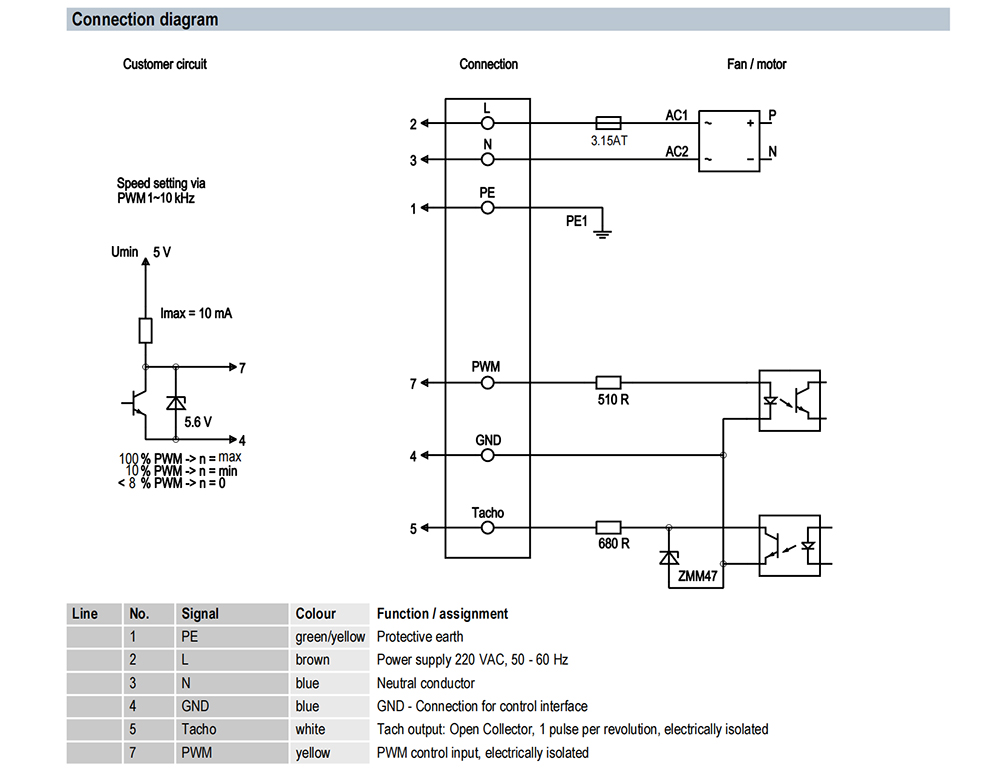
The installation interface of the fan adopts a standardized flange design, and the bolt hole spacing is compatible with mainstream brands in the industry, which can directly replace old equipment without modifying the pipeline. The electrical interface supports 0-10V analog speed regulation and PWM pulse control dual modes, and can be seamlessly connected to the building automation system (BAS) or industrial PLC controller. In a renovation project of an electronic factory, the replacement and system debugging of 32 fans were completed in just 4 hours, minimizing the loss of production stoppage.

(II) Maintenance-friendly: Reduce the life cycle cost

The impeller adopts a quick-release structure and is fixed by three spring clips. Maintenance personnel can complete the removal and cleaning of the impeller within 90 seconds without tools. The motor bearing adopts an external oil filling hole design, which can be lubricated and maintained without disassembling the fan, reducing the average annual maintenance time from 4 hours/unit to 1.5 hours/unit. This "user-centric" design detail reduces the life cycle cost (LCC) of the fan by 23% compared with similar products.

(III) Environmental adaptability: Challenging extreme working conditions

Through extreme environmental testing and verification, the fan can operate stably in a wide temperature range of -20℃ to 60℃. In an environment with a humidity of up to 95%, the moisture-proof treatment process of the motor winding can ensure that the insulation resistance is always greater than 50MΩ. In the plateau area at an altitude of 3,000 meters, the fan air volume attenuation rate was only 8%, while the attenuation rate of ordinary fans exceeded 15%, showing excellent environmental robustness.

Industry impact: Redefining the value standard of ventilation equipment

The launch of R3G190-8317076398 is not only an upgrade of a product, but also promotes the transformation of the value judgment standard of the ventilation equipment industry:

(I) From "parameter competition" to "system adaptation"

Traditional fan manufacturers often focus on the improvement of a single performance parameter, while ebm-papst achieves a precise match between fan performance and system requirements through a deep deconstruction of application scenarios. For example, in the data center scenario, instead of simply pursuing "maximum air volume", the efficiency of the fan under partial load conditions is improved by optimizing the slope of the air volume-static pressure curve. This "scenario-based customization" thinking redefines the logic of product development.

(II) From "equipment supply" to "value co-creation"

ebm-papst provides customers with not only a fan, but also a comprehensive solution including selection consultation, system simulation, and energy efficiency optimization. Its global technical support network can respond to customer needs within 48 hours, and simulate the operating status of the fan in the actual pipeline for customers through CFD simulation software, and predict the impact of system resistance changes on fan performance in advance. This "partnership cooperation" model helps customers increase the project success rate by 35%.

(III) From "functional realization" to "sustainable development"

Driven by the EU ErP directive and China's "dual carbon" goals, the energy efficiency performance of the fan has become a core element of market competitiveness. Its efficiency curve is further optimized on the basis of the IE4 energy efficiency level, and its efficiency at the common operating point (50% air volume) is 5 percentage points higher than the IE4 standard. It is estimated that one fan can reduce CO₂ emissions by about 1.2 tons per year. If 100,000 similar devices worldwide are replaced with R3G190-8317076398, emissions can be reduced by 120,000 tons per year, which is equivalent to planting 6.6 million fir trees.

Future Outlook: Infinite Possibilities of Technology Iteration

In the face of the industry trend of digitalization and intelligence, R3G190-8317076398 has reserved a technology upgrade interface. In the future, by adding sensor modules, real-time monitoring of parameters such as motor temperature, impeller vibration, and airflow pressure can be achieved, and equipment failures can be predicted by combining AI algorithms, and the maintenance mode can be upgraded from "regular maintenance" to "predictive maintenance". At the same time, linkage design with renewable energy systems (such as photovoltaic direct power supply mode) is under development to further reduce the carbon emission intensity of the system.


From aerodynamic simulation in the laboratory to precise airflow control in the clean room; from high heat density heat dissipation in the data center to quiet ventilation in the residential space, the ebm-papst R3G190-8317076398 centrifugal fan uses technology as a pen to draw a blueprint for efficient air treatment in different fields. It is not only an industrial equipment, but also a concrete expression of the ebm-papst brand concept of "innovation, reliability and sustainability". In today's global pursuit of green and high efficiency, this fan is becoming a benchmark in the field of air treatment with its excellent performance and far-reaching industry influence, leading the industry to a smarter and more sustainable future.

Download
CUSTOMER REVIEWS
4.7 0 Reviews
Write a review
Frequently Bought Together
more
Frequently Bought Together

LATEST NEWS

Brief introduction to ebm-papst R3G190-8317076398 centrifugal fan

Brief introduction to ebm-papst R3G190-8317076398 centrifugal fan

Brief introduction to ebm-papst R3G190-8317076398 centrifugal fan

May 26.2025
Principle application and installation points of R3G190-8317076398 fan

Principle application and installation points of R3G190-8317076398 fan

A deep understanding of the working principle and application of R3G190-8317076398 fan, as well as the correct installation method, is essential to give full play to the performance of the fan and ensure its safe operation. This article will introduce the principle application and installation points of the fan in detail.

Mar 28.2025
Operation, maintenance and startup steps of R3G190-8317076398 fan

Operation, maintenance and startup steps of R3G190-8317076398 fan

In order to ensure the normal operation of R3G190-8317076398 fan and extend its service life, correct operation, maintenance and startup steps are essential. This article will introduce the operation and maintenance points and startup steps of the fan in detail to help users better use and manage fan equipment.

Mar 28.2025
Application scenarios and characteristics of R3G190-8317076398 fans

Application scenarios and characteristics of R3G190-8317076398 fans

R3G190-8317076398 centrifugal fans are widely used in many fields due to their unique performance characteristics. A deep understanding of its application scenarios and characteristics and advantages will help to better play the role of the fan and provide strong support for the development of different industries.

Mar 28.2025
Fault handling and case analysis of R3G190-8317076398 fan

Fault handling and case analysis of R3G190-8317076398 fan

This article will introduce in detail the common fault types, cause analysis and corresponding treatment methods of the R3G190-8317076398 fan, and conduct in-depth analysis in combination with actual fault cases.

Mar 28.2025