| Brand: | ebmpapst |
| Part No: | D2D146-BG03-16 |
| Fan Type: | Centrifugal Fan |
| Rated Voltage(V): | 400 |
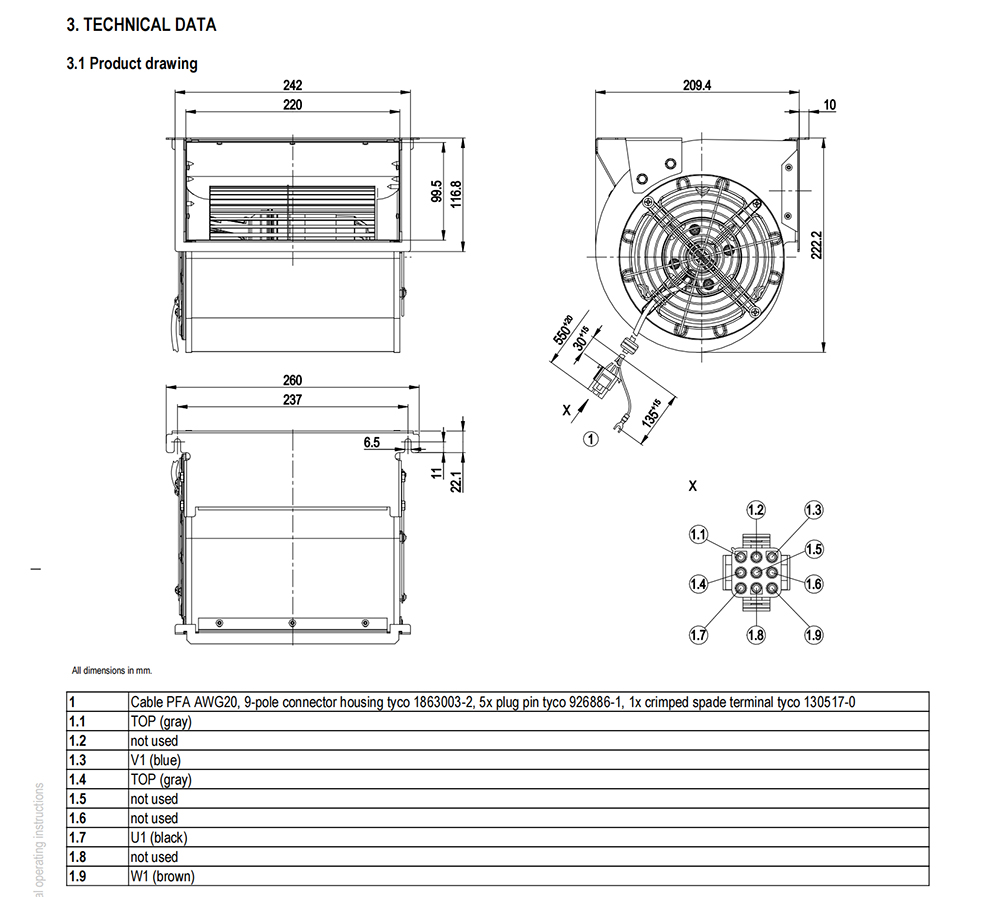
| Size(mm): | 146 |
| Max.Air Flow(m³/h): | 705 |
| Max.Pressure(Pa): | N/A |
| Input Power(W): | 350 |
| Speed(rpm): | 2580 |
| Noise(db): | N/A |


D2D146-BG03-16 fan: an industrial-grade centrifugal ventilation solution that empowers Schneider inverters
In the field of industrial automation and fluid control, fans are core components for energy conversion and gas transmission, and their performance directly affects the stability, energy efficiency and reliability of the system. The D2D146-BG03-16 centrifugal fan launched by ebm-papst forms a deep collaboration with Schneider inverters with precise parameter design, providing an efficient and adaptive power solution for industrial cooling, ventilation and gas treatment scenarios. This article will start from the dimensions of technical characteristics, adaptation logic, application scenarios and industry value, and comprehensively analyze the core advantages and practical significance of this fan.
The technical essence of centrifugal fans and the structural characteristics of D2D146-BG03-16
The working principle of centrifugal fans is based on the acceleration and diversion of gas by centrifugal force. When the impeller rotates at a high speed of 2580rpm, the axially inhaled gas gains kinetic energy under the push of the blades, which is collected by the volute and converted into static pressure energy, and finally transported in a directional manner through the diffuser. This "kinetic energy-static pressure energy" conversion mechanism makes centrifugal fans naturally suitable for scenarios that need to overcome certain pipeline resistance and achieve stable airflow output, such as industrial equipment cooling ducts, building ventilation ducts, etc.
The 146mm size design of D2D146-BG03-16 (usually refers to the impeller diameter) achieves a balance between space occupancy and performance output. The compact structure enables it to be embedded in various standardized equipment cabinets, and the aerodynamic optimization of the impeller is the key support for its performance - the blade curvature, installation angle and hub ratio have been simulated and calculated, and the maximum air flow of 705m³/h can be achieved at a speed of 2580rpm, meeting the ventilation needs of medium-load scenarios. Its volute adopts involute shape, and the inner wall has a smooth transition to reduce airflow turbulence. Combined with the angle optimization of the diffuser, it effectively reduces energy loss and converts the 350W input power into continuous and stable airflow kinetic energy.
Industrial adaptability of electrical parameters: the stable cornerstone of the 400V system
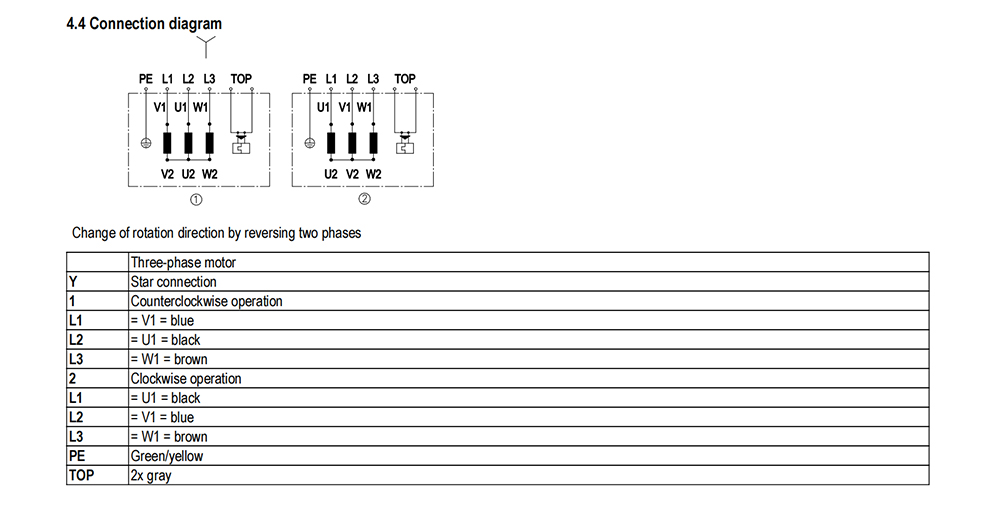
The setting of the rated voltage of 400V makes D2D146-BG03-16 deeply compatible with the industrial three-phase power supply system. In the application scenario of Schneider inverters, this voltage level forms a seamless connection with the output range of the inverter (such as the 380-480V output of the ATV630 series), avoiding power loss and harmonic interference in the step-down or step-up links. For systems that require multiple fans to run in parallel (such as redundant heat dissipation of large inverter cabinets), the unified 400V voltage platform simplifies the power distribution design and reduces the complexity of the control system.
From the perspective of electromagnetic compatibility, the insulation materials and winding technology used in the fan motor can withstand the voltage spike impact caused by the PWM waveform output by the inverter. In combination with the carrier frequency adjustment function of the Schneider inverter (such as 2-16kHz), the partial discharge phenomenon of the motor winding can be effectively suppressed and the motor life can be extended. This electrical compatibility enables the fan to maintain stable operation under conditions of frequent start-stop and speed adjustment, which is particularly suitable for industrial processes that require dynamic response, such as on-demand air supply when the production line beat changes.
Control coordination with Schneider inverter: from drive to intelligent regulation
The core value of Schneider inverter lies in the precise speed regulation and energy efficiency management of the motor, and D2D146-BG03-16 is its adaptive load. The coordination between the two is reflected in three aspects:
(I) Deep matching of V/F control mode
For the "square torque load" characteristics of centrifugal fans, Schneider inverters can enable parabolic characteristic V/F control. In this mode, the output voltage is proportional to the square of the frequency, which can not only ensure the torque output at low speed (avoid stalling when the fan starts), but also suppress motor overload during high-speed operation. For example, when the system needs to adjust the air volume from 705m³/h to 500m³/h, the inverter reduces the output frequency (such as from 50Hz to 35Hz) and proportionally reduces the voltage simultaneously, so that the fan power consumption decreases with the cube of the speed, achieving significant energy saving effects.
(II) Flexibility of multi-speed and PID closed-loop control
Through the multi-speed function of Schneider inverters, multiple speed gears (such as high speed, medium speed, and low speed) can be preset to correspond to different process requirements. In the inverter cabinet heat dissipation scenario, the speed can be automatically switched through the PID controller according to the feedback from the internal temperature sensor: when the temperature is lower than the set threshold, the fan runs at a low speed to reduce noise and energy consumption; when the temperature rises, it automatically switches to high speed to enhance heat dissipation. This closed-loop control mechanism makes the fan no longer an energy-consuming device that "runs at a fixed speed", but an intelligent component that moves on demand.
(III) Double barrier of protection function
The overload protection (OL), overcurrent protection (OC) and overheat protection (OH) functions of Schneider inverter form a double protection with the motor protection of the fan. For example, when the fan impeller is stuck by foreign objects and the current rises suddenly, the inverter will trigger the overcurrent protection at the first time, cut off the output and alarm to prevent the motor winding from burning due to overheating. At the same time, the fan's own thermistor (such as built-in PTC) can be connected to the DI port of the inverter to achieve chain shutdown when the temperature is abnormal, further improving the system reliability.
Typical application scenarios: multi-dimensional value in industrial scenarios
(I) Heat dissipation guarantee of industrial automation equipment
In Schneider Altivar series inverter cabinets, D2D146-BG03-16 is often used as the main cooling fan. The inverter will generate about 3-5% energy loss during the power conversion process, which is released in the form of heat. If it is not discharged in time, it will cause the internal components to age faster or even fail. The fan inhales cold air from the outside, flows through the inverter's IGBT module, capacitor and other heat-generating components, and then discharges the hot air out of the cabinet to form a forced convection heat dissipation channel. Its 705m³/h air volume can meet the heat dissipation requirements of 22-37kW power level inverters. With the temperature closed-loop control of the inverter, the internal temperature of the cabinet can be controlled below 40℃, ensuring that the electronic components work in a safe temperature range.
(II) Ventilation solutions for new energy equipment
In the drying process of the lithium battery production workshop, the nitrogen-filled drying box needs to be continuously ventilated to maintain a low humidity environment in the box. The combination of D2D146-BG03-16 and Schneider ATV320 inverter can automatically adjust the air volume according to the humidity sensor signal in the box: when the humidity exceeds the standard, the fan runs at high speed to accelerate the circulation of drying gas; after the humidity reaches the standard, it switches to low-speed energy-saving mode. This dynamic adjustment not only improves the drying efficiency, but also avoids the "big horse pulling a small cart" phenomenon of traditional fixed-speed fans at low loads. It can reduce energy consumption by about 25% in actual measurements.
(III) Aeration control of environmental protection equipment
In the biochemical pool system of the sewage treatment plant, the fan needs to provide continuous oxygen for microorganisms while avoiding energy waste caused by excessive aeration. D2D146-BG03-16 receives real-time instructions from the PLC through the Modbus communication interface of the Schneider inverter and adjusts the speed according to the dissolved oxygen (DO) concentration feedback. For example, when the DO concentration is lower than 2mg/L, the fan speed is increased to 2800rpm (note that it should not exceed the rated speed) to increase the aeration volume; when the DO concentration is higher than 4mg/L, the speed is reduced to 2000rpm to reduce energy consumption. This precise control not only ensures the sewage treatment effect, but also reduces the power consumption of the aeration link, which meets the energy-saving needs of the environmental protection industry.
Detailed considerations of industrial design: balance between reliability and ease of use
(I) Engineering practice of noise control
Although the noise value is not marked in the parameters, the inherent characteristics of the centrifugal fan make its noise mainly come from airflow disturbance and mechanical vibration. D2D146-BG03-16 effectively reduces vibration transmission and aerodynamic noise by optimizing the dynamic balance of the impeller (accuracy level G6.3), using elastic mounting base and volute sound insulation materials. In practical applications, with the low carrier frequency setting of Schneider inverter (such as 2kHz), electromagnetic noise can be further reduced, making it suitable for noise-sensitive workshop environments (such as auxiliary ventilation systems in semiconductor clean rooms).
(II) Design for maintenance convenience
The fan adopts a modular structure, and the impeller and motor can be quickly disassembled, which is convenient for regular cleaning of impeller dust (such as in dusty cement production line scenarios). The terminal block adopts an anti-loosening design to ensure stable electrical connection in a vibrating environment. In addition, the fan has a speed monitoring interface (such as FG signal output), which can be connected to the AI port of the Schneider inverter to monitor the operating status of the fan in real time, and warn of impeller wear or bearing failure in advance, so as to achieve preventive maintenance and reduce downtime losses.
Industry value: energy efficiency upgrade from components to systemsDriven by the "dual carbon" goal, the industrial field has increasingly stringent requirements for equipment energy efficiency. The combination of D2D146-BG03-16 and Schneider inverter creates multiple values for users through the "precise speed regulation + on-demand energy supply" mode:
Future trends: extension of intelligence and greening
With the development of the Industrial Internet of Things (IIoT), D2D146-BG03-16 can further integrate sensors (such as temperature and vibration sensors) to achieve remote monitoring and predictive maintenance through the Schneider EcoStruxure™ platform. For example, by analyzing vibration spectrum data, impeller imbalance or bearing wear faults can be identified in advance, triggering maintenance work orders to avoid unplanned downtime. At the same time, ebm-papst continues to promote the upgrade of motor energy efficiency. In the future, this model may be upgraded to IE4 ultra-high-efficiency motors. With Schneider's energy efficiency management function, carbon emissions can be further reduced, which is in line with the global industrial green transformation trend.
The D2D146-BG03-16 centrifugal fan is not an isolated component, but a system-level solution that works in deep collaboration with Schneider inverters. Its 400V electrical adaptability, airflow characteristics at 2580rpm, and logical fit with variable frequency control together build an efficient paradigm in the field of industrial ventilation. From heat dissipation protection of automation equipment to precise aeration of environmental protection systems, this fan has become an "invisible but critical" power cornerstone in industrial scenarios with its reliable performance and flexible adjustment capabilities. With the increase in demand for smart manufacturing and energy management, its application boundaries will continue to expand and continue to create value for industrial users.
D2D146-BG03-16 belongs to the centrifugal fan type. The rated voltage is 400V, a common industrial voltage specification, which enables it to adapt to the power systems of most industrial and commercial places, ensuring wide applicability and stability.
May 19.2025D2D146-BG03-16 Correct installation of the fan and in-depth understanding of its principles are essential for achieving its best performance. The following is a detailed introduction to its installation method and principle application.
Apr 03.2025In order to ensure the normal operation of D2D146-BG03-16 fan and extend its service life, correct operation, maintenance and startup steps are essential. The following is a detailed introduction to the relevant content.
Apr 03.2025D2D146-BG03-16 centrifugal fans have unique advantages in many different application scenarios due to their own characteristics. The following is a detailed introduction to their application scenarios and features.
Apr 03.2025During the long-term use of the fan, it is inevitable to encounter various faults. Understanding the common faults and treatment methods of the D2D146-BG03-16 fan is crucial to ensure its normal operation and extend its service life. The following is a detailed analysis based on actual fault cases.
Apr 03.2025